
Hydraulic Press Machines Perfect Fit for Your ApplicationsUpdate:2026-01-04 Hits:218
In the fast-paced world of industrial manufacturing, precision, efficiency, and adaptability are non-negotiable. Whether you’re shaping metal components, molding composite materials, or assembling heavy-duty parts, the right equipment can make or break your production line. That's why hydraulic press machines stand out as the ultimate solution—engineered to deliver unmatched force, consistent performance, and a perfect fit for your unique applications.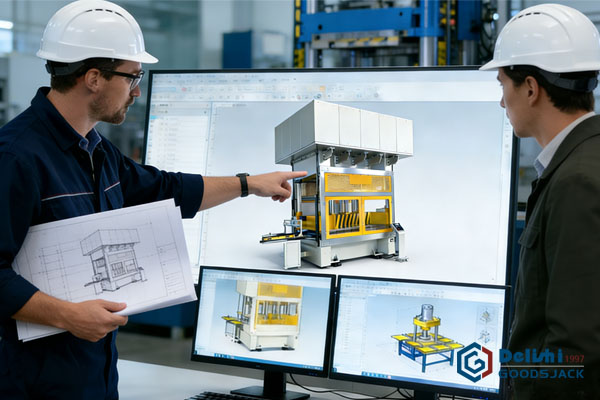
The Core Principle: Controlled Power
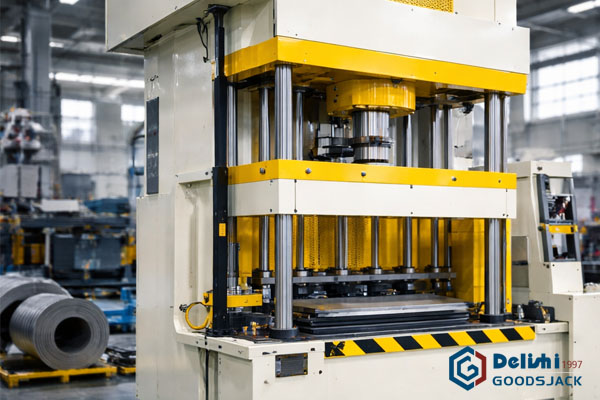
The fundamental advantage of a hydraulic press machine lies in its operation. By using Pascal’s principle to multiply force through pressurized fluid, it delivers smooth, consistent, and controllable linear force. Unlike mechanical presses with fixed stroke lengths and tonnage peaks, hydraulic systems offer unparalleled flexibility. Operators can precisely control the pressure, stroke length, and speed throughout the entire pressing cycle. This "programmable power" is what allows a single machine platform to be perfectly adapted to diverse tasks.
A Spectrum of Applications: One Technology, Many Solutions
The true testament to the hydraulic press's perfect fit is its application breadth:
● Metal Forming & Fabrication: This is a classic domain. From deep drawing and stamping automotive body panels to precision bending and blanking, hydraulic presses provide the steady, sustained force required for deformation without compromising material integrity.
● Molding & Composites: In the plastics, rubber, and composite industries, hydraulic presses are indispensable for compression molding, laminating, and SMC (Sheet Molding Compound) molding. The ability to maintain precise pressure and temperature over a set cure time is critical for producing high-quality, consistent parts like circuit breakers, insulation panels, and automotive components.
● Assembly & Disassembly: The controlled force makes hydraulic presses ideal for precision tasks like bearing insertion and removal, shaft pressing, and other interference-fit assemblies. This prevents damage to expensive components, a key consideration in aerospace and automotive assembly.
● Powder Compacting: For manufacturing powdered metal parts, ceramics, or pharmaceutical tablets, uniform pressure is paramount. Hydraulic presses ensure consistent density and part strength throughout the compact.
● Testing & Quality Control: Hydraulic systems are the backbone of material testing labs, performing crush tests, tensile tests, and fatigue tests where precise load application and measurement are non-negotiable.
Finding Your Perfect Fit: Customization is Key
Modern hydraulic presses are not one-size-fits-all. Manufacturers offer a range of configurations to match specific needs:
● Frame Type: C-frame presses offer easy access for simple pressing tasks, while robust H-frame or four-post presses provide exceptional stability and platen parallelism for high-precision, high-tonnage applications.
● Tonnage & Bed Size: From benchtop models at 10 tons to colossal machines exceeding 10,000 tons, the scale can be matched exactly to your part size and material strength requirements.
● Control Systems: From simple manual valves to fully automated, PLC-controlled systems with programmable cycles and data logging, the level of sophistication aligns with your production volume and repeatability demands.
● Tooling & Accessories: The press becomes application-specific through custom dies, molds, heated platens, or guided tooling plates. This adaptability transforms a powerful machine into a dedicated production cell.
The Strategic Advantages: More Than Just Force
Choosing a hydraulic press tailored to your application delivers tangible benefits:
● Versatility & ROI: One well-chosen press can often handle multiple operations with quick tooling changes, maximizing your capital investment.
● Precision & Quality: Controlled speed and pressure minimize part defects, flash, and residual stress, leading to higher quality finished products.
● Safety & Control: Built-in overload protection and the inherent control of hydraulic force reduce the risk of catastrophic failure compared to sudden mechanical impacts.
● Operational Efficiency: Automated cycles reduce operator fatigue and ensure consistent output, boosting overall productivity.
Conclusion
A hydraulic press machine is far more than a blunt instrument of force. It is a highly adaptable and controllable system whose parameters—power, stroke, speed, and control—can be meticulously engineered to align with your unique production requirements. Whether you are shaping advanced composites, assembling precision instruments, or forming heavy-gauge steel, there exists a hydraulic press configuration that is the perfect fit. By investing in the right press for your application, you are not just purchasing a machine; you are harnessing a cornerstone of reliable, precise, and efficient manufacturing capability.
At Delishi/Goodsjack Hydraulic Machinery, we understand that no two applications are the same. That’s why we offer tailored hydraulic press solutions designed to match your specific needs. Our team of engineers works closely with you to assess your production goals, material specifications, and workspace constraints, then delivers a machine that integrates seamlessly into your operations. Whether you need custom tooling, specialized control features, or a press optimized for a niche task, we have the expertise to deliver a solution that works for you.
Contact us today to discuss your requirements and discover how our customized hydraulic presses can transform your manufacturing process.
News
- Hydraulic Press Machines Engineered for Precision & Heavy-Duty Manufacturing2026-09-28
- Hydraulic Press Manufacturer: Precision-Engineered, Automated Solutions2026-09-21
- Hydraulic Press Industry Trends 2026: Automation, Energy Efficiency & Smart Manufacturing2026-09-14
- Custom vs. Standard Hydraulic Presses: Which Is Right for Your Production?2026-09-09
