
Hydraulic Press Industry Trends 2026: Automation, Energy Efficiency & Smart ManufacturingUpdate:2026-09-14 Hits:95
The hydraulic press industry is entering a new era driven by automation, energy efficiency, and intelligent manufacturing technologies. As global manufacturers face increasing pressure to improve productivity, reduce operating costs, and achieve higher precision, modern hydraulic presses are evolving from traditional heavy-duty machines into smart manufacturing solutions.In 2026, hydraulic press manufacturers are focusing on advanced servo systems, digital monitoring, AI-based maintenance, and automated production integration to help industries such as automotive, aerospace, electronics, renewable energy, and advanced materials achieve faster and more sustainable production.
For manufacturers looking to upgrade their production capabilities, understanding the latest hydraulic press trends is essential for selecting the right equipment and building a future-ready factory.
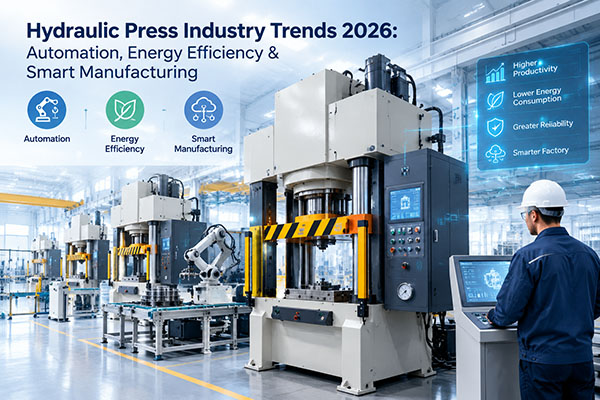
1. Automation Becomes a Key Driver for Hydraulic Press Development
Automation is one of the most important trends shaping the future of hydraulic press technology. Traditional hydraulic presses often rely heavily on manual operation, which can limit production efficiency, consistency, and safety.In 2026, more manufacturers are adopting automated hydraulic press systems equipped with:
• Robotic loading and unloading systems
• Automatic material feeding solutions
• Intelligent production control systems
• Real-time process monitoring
• Automated quality inspection
These technologies allow hydraulic presses to operate continuously with reduced human intervention while maintaining stable forming accuracy.
For industries requiring high-volume production, such as automotive components, battery parts, and electronic components, automated hydraulic presses provide significant advantages in productivity and repeatability.
2. Energy Efficiency Drives the Adoption of Servo Hydraulic Presses
Energy consumption has become a major concern for manufacturers worldwide. Conventional hydraulic presses often run hydraulic pumps continuously, consuming energy even during idle periods.To solve this challenge, servo hydraulic press technology is becoming increasingly popular.
A servo hydraulic press uses a servo motor and intelligent control system to adjust power output according to actual production requirements. Compared with traditional hydraulic systems, servo-driven solutions can significantly reduce energy consumption while improving precision and response speed.
Key benefits include:
• Lower electricity consumption
• Reduced hydraulic oil temperature
• Improved forming accuracy
• Less machine noise
• Longer component service life
For companies seeking sustainable manufacturing solutions, energy-efficient hydraulic presses are becoming an important investment for reducing production costs and improving environmental performance.
3. Smart Manufacturing and Industry 4.0 Integration
Smart manufacturing is transforming hydraulic presses from standalone machines into connected production systems.Modern hydraulic presses can integrate sensors, industrial networks, and intelligent software platforms to collect and analyze production data in real time.
Smart hydraulic press systems enable:
• Real-time pressure and position monitoring
• Production data tracking
• Remote machine diagnostics
• Predictive maintenance
• Process optimization
With Industry 4.0 technologies, manufacturers can identify potential equipment problems before failures occur, reducing downtime and improving overall equipment efficiency.
For global manufacturers, smart hydraulic presses provide greater visibility and control over the entire production process.
4. AI-Based Predictive Maintenance Improves Machine Reliability
Unexpected equipment downtime can create significant production losses. In 2026, artificial intelligence and data analytics are becoming increasingly important in hydraulic press maintenance.AI-powered monitoring systems can analyze data from:
• Hydraulic pumps
• Cylinders
• Servo motors
• Valves
• Hydraulic oil systems
• Pressure and temperature sensors
By detecting abnormal vibration, pressure fluctuations, or temperature changes, intelligent systems can predict potential failures and recommend maintenance actions.
This shift from reactive maintenance to predictive maintenance helps manufacturers improve machine reliability, extend equipment lifespan, and reduce maintenance costs.
5. Higher Precision for Advanced Manufacturing Applications
As industries demand more complex and lightweight components, hydraulic presses must achieve higher precision and stability.Advanced hydraulic press technologies are supporting applications including:
• Automotive lightweight components
• Electric vehicle battery parts
• Aerospace structural components
• Composite material forming
• Semiconductor and electronic parts
Features such as high-rigidity frames, advanced hydraulic control, servo technology, and precise position feedback allow modern presses to achieve consistent forming quality even in demanding applications.
6. Custom Hydraulic Press Solutions for Specialized Industries
Another major trend in 2026 is the increasing demand for customized hydraulic press solutions.Different industries require different forming processes, production speeds, and automation levels. Leading hydraulic press manufacturers are providing customized machines based on specific customer requirements.
• Examples include:
• Deep drawing hydraulic presses
• Cold forging hydraulic presses
• Hot forging presses
• Four-column hydraulic presses
• C-frame servo presses
• Custom non-standard hydraulic press systems
Customized solutions help manufacturers achieve higher production efficiency while meeting specific product requirements.
7. Digital Transformation Creates Smarter Hydraulic Press Factories
The future of hydraulic press manufacturing is closely connected with digital transformation.Smart factories are combining hydraulic presses with:
• Industrial robots
• MES production management systems
• Cloud-based monitoring platforms
• Digital twins
• Automated inspection systems
This integrated approach enables manufacturers to optimize production processes, reduce waste, and improve product quality.
Hydraulic presses are no longer just forming machines; they are becoming intelligent production centers within modern factories.
The Future of Hydraulic Press Manufacturing in 2026 and Beyond
The hydraulic press industry is moving toward a smarter, greener, and more automated future. Automation improves productivity, servo technology reduces energy consumption, and smart manufacturing enables better control and reliability.For manufacturers investing in new production equipment, choosing an advanced hydraulic press with intelligent control, energy-saving technology, and automation capability will be critical for maintaining competitiveness.
As a professional hydraulic press manufacturer, Goodsjack Hydraulic Machinery continues to develop innovative press solutions designed for modern manufacturing demands, including servo hydraulic presses, forging presses, deep drawing presses, and customized hydraulic forming systems.
The future of hydraulic pressing is not only about higher force capacity — it is about smarter operation, lower energy consumption, and more efficient manufacturing.
News
- Hydraulic Press Machines Engineered for Precision & Heavy-Duty Manufacturing2026-09-28
- Hydraulic Press Manufacturer: Precision-Engineered, Automated Solutions2026-09-21
- Hydraulic Press Industry Trends 2026: Automation, Energy Efficiency & Smart Manufacturing2026-09-14
- Custom vs. Standard Hydraulic Presses: Which Is Right for Your Production?2026-09-09
